
🔮 Development of the Atomic Model 🔮
How our understanding of the atom evolved over centuries — from indivisible spheres to the model we use today.
The Timeline
Key Principle
"New experimental evidence leads to a model being changed or replaced." — This is the nature of science. Each model was the best explanation at the time until new evidence showed it was incomplete.
Rutherford's Alpha Scattering Experiment
Most alpha particles passed straight through the gold foil without being deflected.
The atom is mostly empty space.
Some alpha particles were deflected at small angles as they passed close to the nucleus.
The nucleus has a concentrated positive charge that repels the positive alpha particles.
Very few alpha particles bounced straight back towards the source.
The nucleus is very small, very dense, and positively charged — enough to repel alpha particles head-on.
What Happened
Alpha particles were fired at thin gold foil. Three key observations:
- Most alpha particles passed straight through → Most of the atom is empty space
- Some were deflected at small angles → There is a positive charge in the centre (repelling the positive alpha particles)
- Very few bounced straight back → The nucleus is very small, dense, and positively charged
Plum Pudding vs Nuclear Model — 4 Key Differences
- Plum pudding has no nucleus — nuclear model has a small dense nucleus
- Plum pudding has positive charge spread throughout — nuclear model has positive charge concentrated in the nucleus
- Plum pudding has electrons embedded in the positive charge — nuclear model has electrons orbiting at a distance
- Plum pudding has no empty space — nuclear model is mostly empty space
2. Plum pudding: positive charge is spread evenly throughout; nuclear: positive charge is concentrated in the nucleus [1]
3. Plum pudding: electrons are embedded in the positive charge; nuclear: electrons orbit at a distance in energy levels [1]
4. Plum pudding: no empty space; nuclear model: mostly empty space [1]
Some were deflected at small angles → there is a concentration of positive charge in the centre (the nucleus repels the positive alpha particles) [1]
Very few bounced straight back → the nucleus is very small and very dense, with most of the atom's mass concentrated there [1]
This disproved the plum pudding model because if the positive charge were spread out evenly, alpha particles would never bounce back [1]
A) Continues undeflected B) Deflected at an angle C) Bounced straight back D) Deflected upwards
Which path is taken by the majority of particles?
Evidence from the alpha particle scattering experiment led to a change in the model of the atom from the plum pudding model. Explain how.
(So) the mass of the atom is concentrated in the nucleus / centre OR most of the atom is empty space [1]
Some (alpha) particles were deflected / reflected [1]
(So) the atom has a (positively) charged nucleus / centre [1]
Explain why the results of the alpha scattering experiment could not be explained by the plum pudding model.
(a) Why did this experiment lead to a new model of the atom, replacing the plum pudding model? [1]
(b) Why is it important that the experimental results and the predictions are the same? [1]
(b) If the results match the predictions, it provides evidence that the model is correct / supports the theory. If the results do not match the predictions, the model must be changed or replaced [1]
Compare the plum pudding model with the nuclear model of the atom.
Differences:
• Plum pudding: ball of positive charge spread throughout → Nuclear: positive charge concentrated at the centre (nucleus) [1]
• Plum pudding: electrons embedded / spread throughout the positive charge → Nuclear: electrons outside the nucleus [1]
• Plum pudding: no empty space in the atom → Nuclear: most of the atom is empty space [1]
• Plum pudding: mass spread throughout → Nuclear: mass concentrated at the centre [1]
(a) Name each model (A, B, C and D). [2 marks]
(b) Put them in chronological order (earliest to latest). [2 marks]
A = Bohr model (energy levels / orbits) [½]
B = Dalton model (solid, indivisible sphere) [½]
C = Rutherford model (nuclear model) [½]
D = Thomson model (plum pudding model) [½]
(b) Chronological order:
B → D → C → A [2]
Dalton (ancient/early 1800s) → Thomson (1897) → Rutherford (1911) → Bohr (1913)
For each path, explain what it tells us about the structure of the atom.
Path Y — The alpha particle is deflected at a small angle as it passes close to the nucleus. This tells us that there is a concentration of positive charge in the centre of the atom (the nucleus) that repels the positively charged alpha particle [1].
Path Z — The alpha particle bounces straight back. This tells us that the nucleus is very small, very dense, and positively charged — dense enough and strongly charged enough to completely reverse the direction of the alpha particle [1].
A Level - February
PHYSICS ONLY
16, 17, 18, 19 Feb 2026
Revision Course
GCSE - Easter
BIOLOGY, CHEMISTRY PHYSICS
7 - 10 April 2026
Revision Course
A Level & GCSE
PHYSICS ONLY
Term - Time
one to one
How You Can Work With Me
Support is offered in clear layers, so students and families can choose what fits best.
Free Community Access
A welcoming starting point with BRIDGE-based resources and introductory courses.
1:1 Specialist A-level Physics Support
Personalised teaching rooted in deep understanding, confidence, and exam success.
Small Group Programmes
Structured learning with motivated peers, focused on thinking, discussion, and application.

About Kate
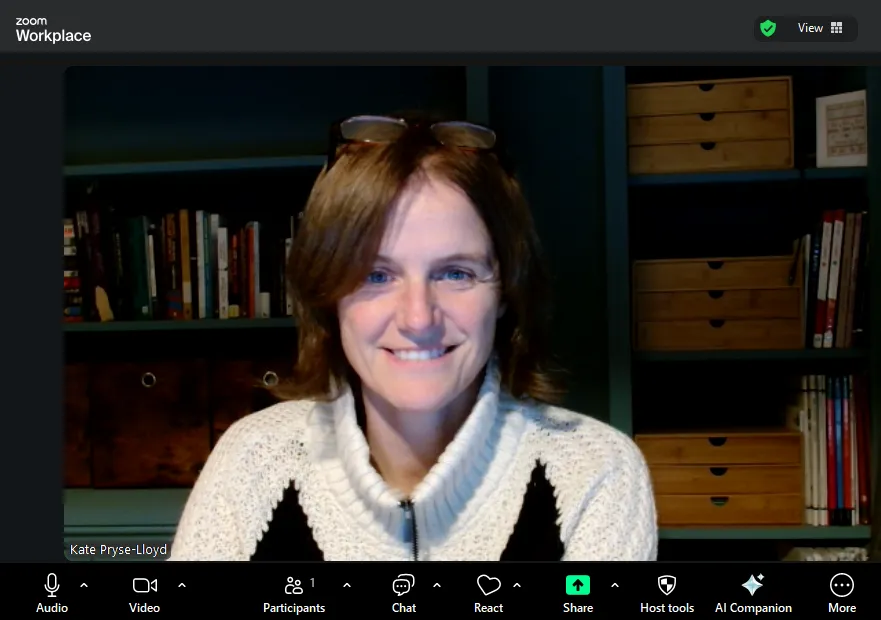
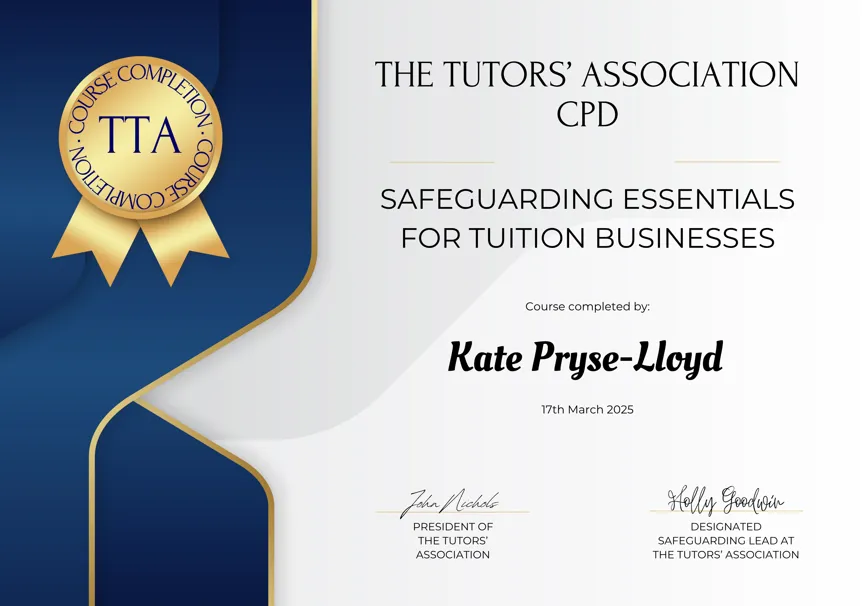
I’m Kate — an experienced Physics teacher, examiner, and the founder of Physics with Kate.
Over more than 15 years, I’ve taught and examined thousands of students and seen first-hand how capable girls can lose confidence in Physics at A-level. I’ve also seen how quickly that changes when teaching focuses on understanding, courage, and belonging.
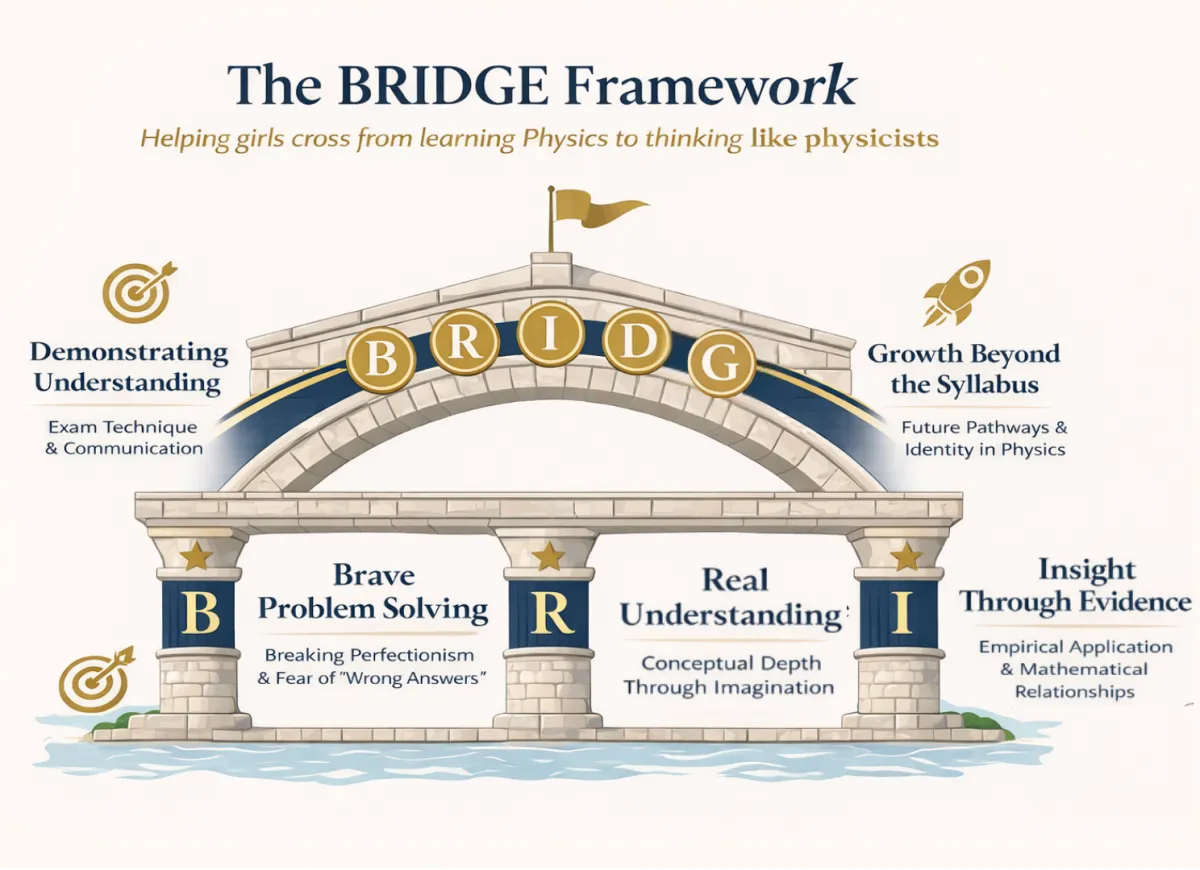
The BRIDGE Framework grew from real classrooms, real results, and a deep belief that girls belong in Physics — and can excel in it.
Ready to Build Confidence in Physics?
Whether you’re looking for structured support, a specialist tutor, or a community that truly understands A-level Physics, you’re in the right place do join my community or book in with me to find out more about I can support you, your department or your child.
A Community Where Girls Belong in Physics
The Physics with Kate Community is a supportive, academically focused space for girls studying A-level Physics.
Inside the community, students have access to:
Free BRIDGE-based mini courses
Brave and opened - Guided problem-solving sessions
Real understanding of the concepts
Insight by applying formulas and calculations to solve problems
Demonstrate understanding with exam technique support and revision resources
Growth, support with UCAS, extra-curricular competitions and projects and industry links
Example Visible sixth formers normalise girls in Physics for younger year groups
Free to join a network of like-minded girls who take Physics seriously
Subscriptions for 1:1 and group tutoring
This is a place where curiosity is encouraged, ambition is normalised, and girls feel confident to ask questions and think deeply.





Facebook
Instagram
X
LinkedIn
Youtube