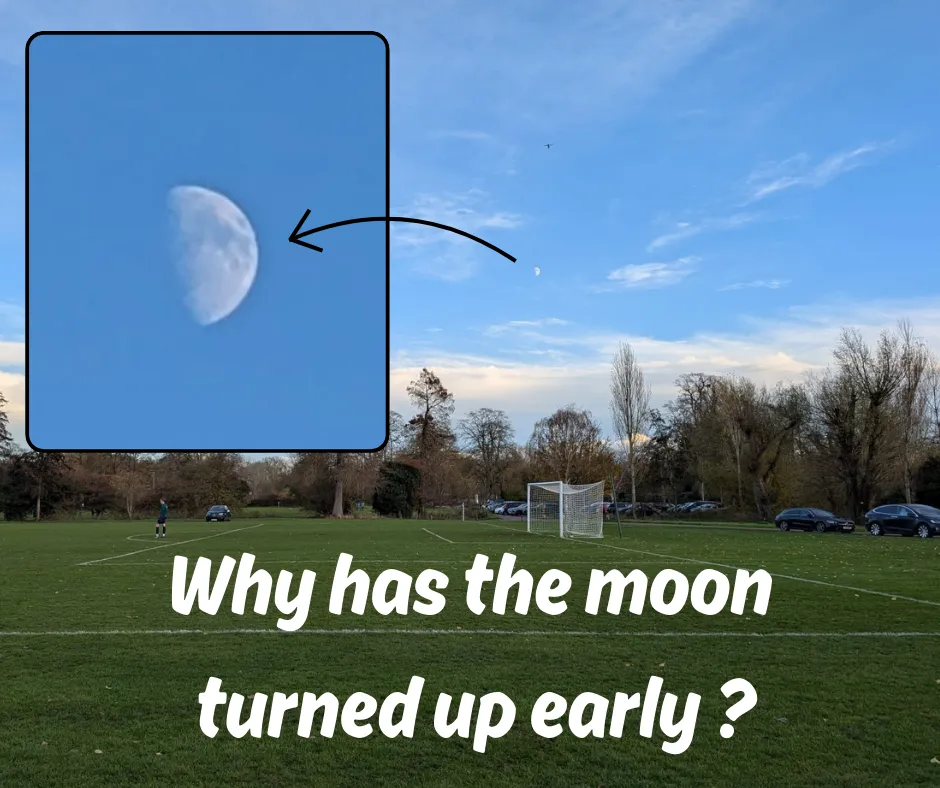
Why is the moon visible during the day?
Why You Can See the Moon During Winter Daytime
Have you ever noticed the moon hanging in the sky on a crisp winter afternoon and wondered why it's so visible? The answer is simpler than you might think, and it's all about light, angles, and contrast.

The Moon Is Always Lit
The moon is visible during the day in winter because of how the moon orbits Earth and the timing of its position relative to the sun.
Here's the first thing to understand: the moon is always half-lit by the sun. There's no special "nighttime
moon light" that turns on and off. We can see it whenever it's above our horizon and bright enough to stand out against the sky.
Winter Sky: Less Intense, Less Bright
In winter in the UK, the key reason you notice the moon more during the day is about the brightness of the sky itself.
During winter, sunlight hits the UK at a shallow angle. This means the same amount of sunlight is

spread over a larger surface area, making it less intense. As a result, the winter sky isn't as bright blue as it is in summer (or at the equator).
It's All About Contrast
The moon itself is just as bright in winter as in summer - it's always reflecting the same sunlight. But against the dimmer winter sky, the bright moon stands out and is easy to see during the day.
In summer, the opposite happens: sunlight hits the UK more directly, creating a much brighter, more intense blue sky. The moon is still there and still just as bright, but you don't notice it as much because it doesn't contrast as strongly against the brilliant summer sky.
So it's really about contrast - the moon is always bright, but winter's dimmer skies make it more visible during daytime hours.


